Table of Contents
In Short
In the world of business and finance, understanding the difference between gross revenue and net revenue is crucial.
I will be honest, I was clueless about both until I started TCC. 😀
These two concepts, often used interchangeably, are in fact distinct and serve different purposes in financial analysis.
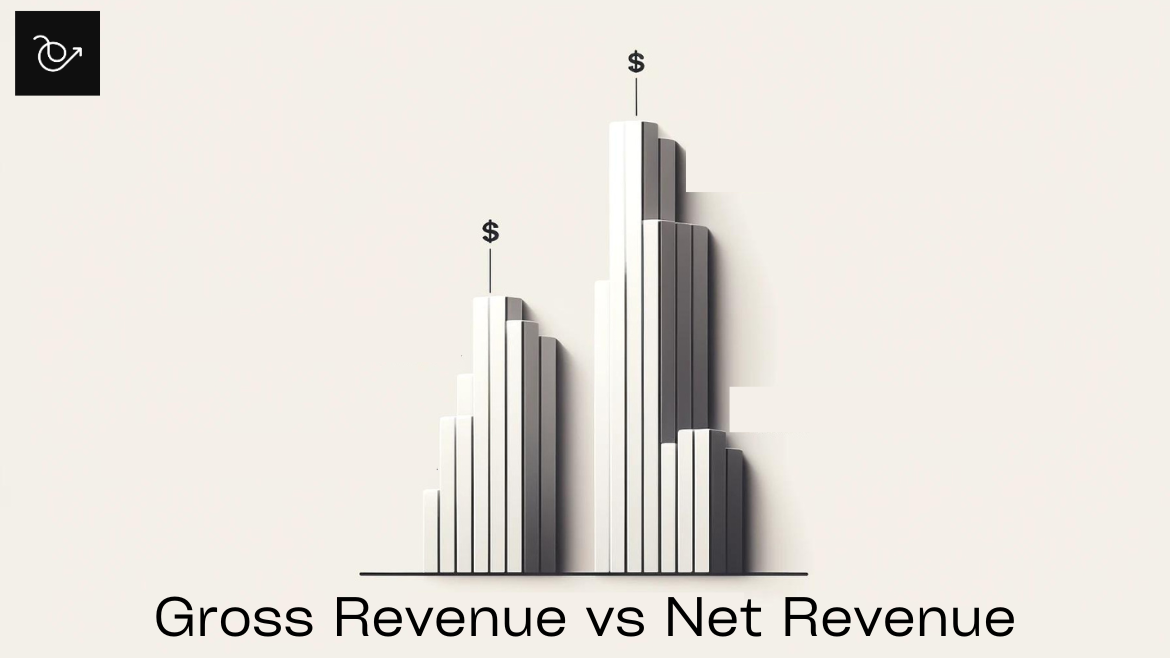
The comparison of gross revenue vs net revenue is a fundamental aspect of financial management and accounting.
I’m making an effort to explain that difference in this blog.
Before we go ahead, understanding the difference between gross and net revenue is essential for businesses to accurately assess their financial health, make informed decisions, and strategize for growth.
It also helps investors and stakeholders to evaluate a company’s profitability and financial stability.
What is Gross Revenue?
Gross revenue, also known as gross income or sales revenue, is the total amount of money generated by a business from its primary operations, before any costs or expenses are deducted.
It is the raw income that a business earns.
What are the components of gross revenue?
Gross revenue comprises of:
- Sales Revenue: The income from selling goods or services.
- Interest Revenue: Income earned from investments or lending.
- Rental Revenue: Income from renting out properties or assets.
What is Net Revenue?
Net revenue, also known as net income or net profit, is the amount of money a business has left after all costs, expenses, taxes, and other deductions are subtracted from the gross revenue.
It is the actual profit that a business makes.
Gross Revenue vs Net Revenue: Key Differences
Here are the key differences between gross revenue and net revenue of a business.
1. Concept
The main difference between gross revenue and net revenue lies in what they represent:
- Gross Revenue: Represents the total income generated by a business.
- Net Revenue: Represents the actual profit made by a business after all costs and expenses are deducted.
2. Impact on Business
The difference between gross and net revenue can significantly impact a business’s financial health and decision-making:
- Gross Revenue: A high gross revenue indicates strong sales performance. However, it does not account for the costs involved in generating that revenue.
- Net Revenue: A high net revenue indicates efficient cost management and profitability. It is a more accurate measure of a business’s financial health.
3. Factors Affecting Gross Revenue & Net Revenue
The two major factors that affect gross revenue are:
- Market Demand: Market demand for a product or service can significantly impact gross revenue. High demand can lead to increased sales and higher gross revenue.
- Pricing Strategy: The pricing strategy of a business also affects its gross revenue. Higher prices can lead to higher gross revenue, provided that the demand remains constant.
Whereas, those that impact net revenue are:
- Operating Costs: Operating costs, including the cost of goods sold, wages, rent, and utilities, directly impact net revenue. Higher operating costs reduce net revenue.
- Taxation: Taxes also affect net revenue. Higher taxes reduce the amount of revenue left after all deductions.
4. Calculating Gross vs Net Revenue
How to calculate gross revenue?
Gross revenue is calculated by adding up all the revenue from various sources, including sales, interest, and rent.
The formula for calculating gross revenue is:
Gross Revenue = Total Sales + Total Interest + Total Rent
How to calculate net revenue?
Net revenue is calculated by subtracting all costs and expenses from the gross revenue.
The formula for calculating net revenue is:
Net Revenue = Gross Revenue – Total Costs and Expenses
5. Importance of Gross Revenue and Net Revenue
Here’s why gross revenue is important:
- Business Performance: Gross revenue is an important measure of a business’s performance. It shows how well a business is doing in terms of sales and revenue generation.
- Investor Perception: Investors often look at gross revenue to assess a company’s growth potential. A company with high gross revenue is often seen as a good investment.
And the importance of net revenue is:
- Profitability Assessment: Net revenue is a key indicator of a business’s profitability. It shows how much profit a business is making after all costs and expenses are accounted for.
- Cash Flow Management: Net revenue is also important for cash flow management. It shows how much cash a business has left to reinvest, pay dividends, or save for future use.
6. Examples of Gross Revenue vs. Net Revenue
Example 1: An e-commerce business might generate $1 million in sales (gross revenue), but after deducting costs such as website maintenance, advertising, and shipping, the net revenue might be $600,000.
Example 2: A consulting firm might earn $500,000 in fees (gross revenue), but after deducting expenses such as salaries, office rent, and utilities, the net revenue might be $200,000.
Conclusion
The difference between gross revenue and net revenue is crucial in business and finance. While gross revenue represents the total income generated, net revenue represents the actual profit after all costs and expenses are deducted.
Understanding the difference between gross and net revenue can help businesses make informed decisions, assess their financial health, and plan for growth.
It can also help investors evaluate a company’s profitability and financial stability.

- I'm a clueless founder
- 04/09/2026
Week by week, what actually happens. What gets built, what we need from you, and what your team runs once we leave.
- 5 minutes reAD

- I'm a clueless founder
- 12/11/2025
Your SaaS trial isn’t just a feature, it’s a growth lever. Learn how to design one that drives real adoption, fit, and long-term revenue.
- 13 minutes reAD

- I'm a clueless founder
- 14/10/2025
- 14 minutes reAD
Read it before your competitors do.
Reading is one thing. Fixing is another.
If something you read here sounds like your business, get on a call. We will show you exactly what to do about it.
3 new clients a quarter. That is all we take.
3 in 4
Clients come back for more
11 weeks
From stuck to a working revenue system