- TL;DR:
Startups that treat SEO as a long-term business asset, not just a traffic channel see the real compounding value. In 2025 and beyond , it’s no longer about ranking alone. It’s about being the best answer in your category, across search engines, AI assistants, and community platforms. That requires integrating SEO with RevOps strategy, anticipating nuanced buyer questions, and building structured, defensible content ecosystems. Whether you’re bootstrapping with a lean team or scaling post-Series A, modern SEO is your compounding growth engine – if you know how to wield it.
SEO continues to be one of the most misunderstood but powerful levers in a startup’s growth stack.
Founders often see it as a top-of-funnel awareness play, but seasoned RevOps leaders and even veterans know it fuels every stage of the buyer journey; from education to consideration to conversion. Unlike paid channels, SEO has the power to compound: the more helpful, structured, and targeted your content, the more it reinforces your brand’s visibility and authority.
What’s new in 2025 is the rise of Answer Engine Optimization (AEO).
As search behavior shifts to AI-powered tools like ChatGPT, Gemini, and Perplexity, visibility means more than Google rankings. AEO is about structuring content in a way that these systems can interpret, trust, and surface as the definitive answer.
I contrast organic exposure decline for low-intent content with rising ROI in SaaS SEO, using the 702% ROI stat to emphasize long-term value. The 53.3% organic traffic stat reinforces why SEO is indispensable (DigitalSilk).
That requires clear formatting, schema markup (like FAQ and HowTo), and domain authority built through deep content clusters. Startups that adapt early to this model gain an asymmetric advantage.
What is SEO?
It’s Search Engine Optimization.
Let’s comprehend by breaking the term because it’s made up of two different words: Search Engine and Optimization.
Firstly, Search Engine.
A lil story to make the non-marketers understand better.
There’s a retail shop near my house that sells a variety of products from different brands, making it easily accessible for people in the area.
You say it and they have it for sure.
That’s like a Search Engine of our locality.
There is a collection of thousands of websites and millions of TB of data (products) on the World Wide Web which is the Internet.
And Search Engines were created, so we don’t have to memorize the URLs of different websites to get our queries answered.
For example: Google, everybody knows him, the fuckboi of Search engines but in a parallel universe because it is used by mostly everyone.
Top three search engines around the world[1]
- Bing
- Yahoo
- ChatGPT (AI Search Engine)
- Perplexity
It is that one software that works for people all around the world.
That’s why we require Optimization.
Optimization means effectively using the resources for our advantage. (You can take lessons from your ex on this 🥲)
In search engines, optimizing your websites and webpages helps you make it search-friendly and rank higher than others
I hope you understand everything deeply because we are heading inside SEO to know how it reads and ranks our content.
How does SEO work?
Do you know that SEO has a pet spider that helps it in reading your content?
Yes, an educated spider.
The crawler spider that reads your content as soon as it gets published and saves it in the search engine’s local server.
The indexer then categories the data into different indexes.
When you are new to a website, indexing must be requested, but with consistent content publishing, the search engine will recognize you and automatically index it.

Why do Startups need SEO?
Are you a startup owner?
Do you have a limited budget and resources to fulfill your startup’s marketing needs?
If your answer is yes for both…
Then your solution is SEO.
68% of online experiences begin with an organic search[2].
Which means everyone heads to the search engines, mainly Google whenever they have a query regarding any topic.
And only 6% of those searches result in clicks to ads.
The other 94% goes to organic results (the unpaid, valuable content).
Benefits of SEO for Startups
SEO can help your startup become fine like wine over time.
Stats shows that SEO can help startups reduce the cost of customer acquisition by 87.41% on average compared to digital advertising[3].
And some other benefits include:
- Cost effective method to drive traffic to your website.
- Rank higher by optimizing your website and helping your prospects find you.
- More attention and visibility so you are soon recognized by your company’s name.
How to make full use of SEO for Startups?
Now you know what SEO practice is, you also have a need for it in your business because of the benefits but how can you squeeze out all the goodies from it?
At TCC, we prioritized SEO from day 1 and stayed consistent with our efforts.
Fast forward to 2 years, we have seen a number of results of our hard work along with some smart work.
Here, I am gonna share all the tips that can come handy if you are starting or stuck with an SEO strategy for your startup.
So let’s start with the basics.
Types of SEO
Here are the types of SEO you should know and implement for your startup.
1. On-Page SEO
A bit complicated and an ongoing process which you can control.
By customizing your website’s outlook, content and keyword density.
You can also optimize headlines, titles, meta descriptions, images and URLs to help search engines understand your website and its relevance to searcher’s query.
2. Off-Page SEO
In this, you help your website rank without making any changes in it.
You promote it by mentioning it in different ways on social media and other websites.
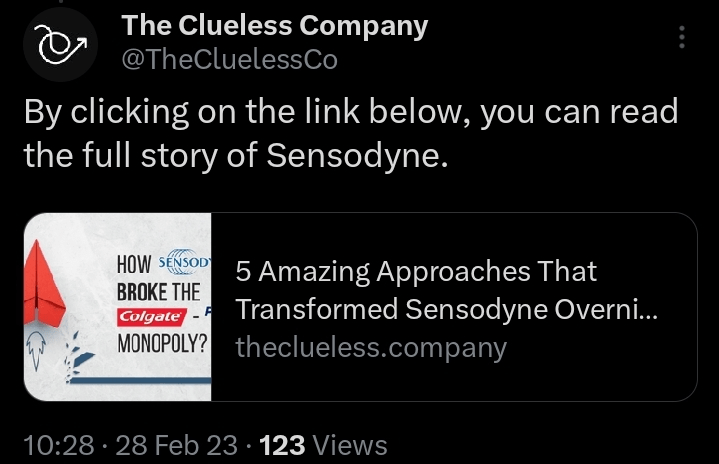
You can also use content marketing like we at The Clueless Company wisely repurposes our blogs content into a blog post and share the link of the respective blog.
This type is helpful in building your website’s reputation and EEAT (Experience, Expertise, Authoritativeness and Trustworthiness).
3. Technical SEO
The most crucial aspect of SEO. The above two types won’t exist without this. It helps in improving crawling and indexing of the content.
It’s usually the work of a developer.
As it focuses on improving user experience by loading websites faster, SEO friendly structure of the website, redirecting to web pages, making your website mobile-friendly.
4. Local SEO
It must be clear in the name, local.
Nearly 2 in 3 of smartphone users are more likely to purchase from companies whose websites customize information to their location[4].

And, 72% visits the store within 5 minutes[5].
We can optimize our website for this by including business’s name, address and phone number on every page and create a Google Business Profile.
Now, I’m gonna share SEO best practices to help you create a personalized SEO strategy for your startup.
Will be using the word Google sometimes
Because,
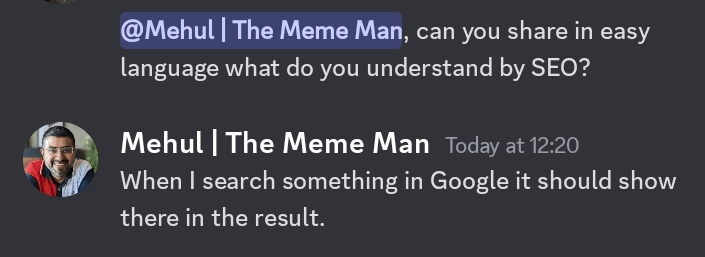
But it sums up all the search engines ranking.
SEO for Startups: Best Practices
SEO is vital but also complicated when you are new to this, so gonna share some tips and tricks from our experience.
So that you don’t end up scratching your head after every step.
1. Build a Content Strategy with Clusters, Comparisons & Defensibility
A common mistake I see with startups is they chase blog post volume without a unifying strategy. The result? Scattered content, no topical authority, and minimal ROI.
The antidote is a pillar-cluster framework.
Let’s say you sell a RevOps enablement tool. Your pillar page might be “What is Revenue Operations?”; a 2,000+ word strategic resource. Around it, you create 8 – 12 supporting articles: “RevOps vs SalesOps”, “RevOps KPIs”, “Why RevOps fails at early-stage startups”, and so on. This internal linking signals to Google (and AI crawlers) that you own the topic. More importantly, it reflects how your buyers search and self-educate.
Another must-have asset for startups: comparison and alternatives pages. If your ICP is in the decision phase, they’re searching for validation viz. “[Your tool] vs [competitor]” or “alternatives to [market leader]”. I’ve seen these pages drive 30%+ conversion rates in SaaS GTM motions. The key is transparency: include feature matrices, candid pros and cons, and direct CTAs. Publish them early, and treat them as living documents.
2. Keyword + Intent Research: From Vanity to Velocity
Keyword research isn’t about finding the highest search volume terms. It’s about understanding how your ICP thinks: their pain points, language, and context.
Founders often fall into the trap of targeting terms like “best CRM” or “top SaaS tools,” only to realize later that the competition is fierce and the traffic doesn’t convert. Instead, reverse-engineer demand:
- Interview 3-5 ideal customers. How do they describe their challenges?
- Mine your own Search Console for long-tail queries already bringing in impressions.
- Browse community platforms like LinkedIn, Reddit, and Slack groups to uncover emergent buyer language.
Then, map those insights to the funnel:
- TOFU: Informational searches like “how to align sales and marketing teams”
- MOFU: “best RevOps tools for SaaS startups”
- BOFU: “[Your product] vs [competitor]”, “schedule demo [product name]”
Long-tail keywords and buyer-intent mapping are framed in the context of 70% of search traffic coming from long-tail terms, and the first page earning 69% of clicks (DigitalSilk).
This shift from vanity metrics to velocity. Pipeline velocity marks the difference between SEO that informs and SEO that converts.
3. On-Page & Technical SEO with AEO Prioritization
On-page SEO is where great content either gets seen, or gets buried. Most startups stop at basic optimizations (a few keywords and a meta description), but what drives results in 2025 and beyond is how well your content interfaces with AI and structured search.
Start with title tags that reflect real questions and outcomes. For example, instead of “RevOps Guide,” use “What is RevOps? | Align GTM Teams and Drive SaaS Revenue.” This mirrors how your buyers search and how AI indexes.
Next, use semantic headings and internal linking. Your H2s should echo real queries: “How does RevOps reduce churn?” or “What KPIs should RevOps own in a SaaS startup?” This helps Google and AI models map your content to common user questions.
Schema markup is a non-negotiable: add FAQs, HowTo, Product, and Organization markup where relevant. This makes your content eligible for featured snippets and AI overviews.
And don’t ignore technical performance. Core Web Vitals, like load speed and mobile responsiveness directly affect rankings and engagement. Use Lighthouse to audit issues and prioritize fixes monthly.
#TCCRecommends: Why Your SaaS Needs GEO (Generative Engine Optimization)
4. SEO ROI Measurement with RevOps Alignment
If you can’t measure how SEO contributes to revenue, you’re flying blind. This is where RevOps strategy comes in.
Traditional SEO metrics (traffic, impressions, rankings) tell you visibility. But what you need is attribution: what content led to what pipeline.
Use tools like HubSpot, Dreamdata, or HockeyStack to map:
- TOFU metrics: impressions, CTR, time on page
- MOFU metrics: scroll depth, repeat visits, content-assisted conversions
- BOFU metrics: demo requests, signups, deal attribution
Here’s a common scenario: a startup founder sees a blog post driving low demo conversions. But RevOps analysis reveals it significantly reduces sales cycle time. That’s content worth keeping. Align KPIs with buyer journey stages; not just surface traffic.
The impact of SEO on CAC is shown by highlighting the 60% reduction in CAC when organic traffic matches paid traffic levels. This drives home why RevOps-aligned SEO isn’t luxury;it’s a growth imperative (AdLift).
#TCCRecommends: SaaS SEO metrics to track
5. Local & Voice/AEO SEO (When It Matters)
Not every startup needs local SEO, but if you have physical events, co-marketing partners, or regionally targeted campaigns, it matters.
Claim and optimize your Google Business Profile. Ensure your name, address, and phone number (NAP) are consistent across the web. Use local landing pages and backlinks from local publications or directories to boost authority.
For voice search and AEO, prioritize natural phrasing. People ask Siri or ChatGPT, “What’s the best RevOps platform for SaaS?”, not “RevOps SaaS tool.” Your content should answer that exact phrasing in the opening lines.
Structure matters too. Use lists, tables, and bullet points. These formats increase your chances of being pulled into voice responses or AI-generated summaries.
Real Pitfalls to Watch For in SEO for Startups
Here are five costly mistakes I see startups make again and again:
- Hiring SEO agencies with no RevOps context: They may drive traffic but can’t align with GTM outcomes.
- Publishing too much TOFU content without BOFU conversion paths: It builds visibility but not pipeline.
- Measuring traffic instead of revenue contribution: Traffic is a vanity metric if it doesn’t convert.
- Ignoring the language of the ICP: Tools can’t replace actual customer interviews and sales calls.
- No internal linking strategy: Orphaned content doesn’t build topical authority or help the buyer journey.
SEO is strategic, not mechanical. Treat it like a revenue channel, not a checklist.
FAQs
What’s the difference between SEO and AEO?
SEO is about visibility in traditional search engines like Google. AEO (Answer Engine Optimization) is about being the definitive answer in AI-powered platforms like ChatGPT and Perplexity. It requires clarity, structure, and depth.
How long does it take for SEO to generate ROI?
If executed strategically and aligned with RevOps goals, you’ll often see early signals within 3–6 months. The real magic happens in months 6–12 as traffic compounds, conversions improve, and your content starts closing pipeline gaps.
Should startups prioritize competitor comparison pages?
Absolutely. These are high-intent BOFU assets that preempt objections, boost conversions, and give you control over positioning. Publish them early, update them often.
Can I do effective SEO with a small budget?
Yes. Start lean with Google Search Console, Keywords Everywhere, and ChatGPT for ideation. Once traction builds, add Ahrefs or SE Ranking to deepen your insights. Budget isn’t the limiter: clarity and consistency are.
How does SEO plug into RevOps?
SEO generates inbound interest. RevOps ensures that interest is tracked, qualified, nurtured, and closed efficiently. Without tight integration, you’ll miss attribution and opportunities to scale what’s working.
Final Thoughts: Think Like a Strategist, Not Just a Publisher
SEO for startups in 2025 and beyond isn’t about churning out blog posts. It’s about crafting a defensible knowledge ecosystem that aligns with how your buyers search, what your sales team needs, and how your product differentiates.
If you’re a startup founder or RevOps lead, think of SEO as strategic infrastructure. Build content with intent. Map it to funnel stages. Use data to refine it. And above all, structure it so both humans and AI understand why you are the best answer.
Don’t just write. Engineer content that drives discoverability, defensibility, and demand.