Table of Contents
In Short
When I was new to marketing and its operations, I came across some alien terms like MQL, SQL, and how marketing is responsible for nurturing fresh leads to MQL.
Needless to say, I was clueless.
With time, I understood that MQL stands for Marketing Qualified Lead, and how important it is for businesses and marketers to work on them for sustainable growth.
This blog is for those who are clueless like I was. It is a detailed guide on MQLs and how you can work with them.
What are Marketing Qualified Leads?
A Marketing Qualified Lead (MQL) is a lead that has shown interest in a company’s product or service and is more likely to become a customer. The determination of an MQL is typically based on the lead’s behavior and engagement with the company’s content.
For example, if a lead downloads a whitepaper, attends a webinar, or engages with the company on social media, they may be classified as an MQL.
Why is MQL Important?
But then, is MQL that important? Here’s why and how important it is for businesses and marketers alike.
- The impact of MQL on lead generation
MQL has a significant impact on lead generation. By focusing on MQLs, companies can increase their conversion rates and generate more sales.
This is because MQLs are more likely to convert into customers compared to other leads.
- Driving marketing and sales alignment with MQL
MQL can also help drive alignment between marketing and sales teams. By agreeing on what constitutes an MQL, both teams can work towards the same goal – converting MQLs into customers.
This can lead to more effective marketing campaigns and a more efficient sales process.
- Improving marketing ROI through MQL
By focusing on MQLs, companies can improve their marketing ROI. This is because MQLs are more likely to convert into customers, leading to higher revenue.
At the same time, by focusing on MQLs, companies can save resources that would otherwise be spent on less promising leads.
The role of MQL in marketing
In marketing lead qualification, MQL plays a pivotal role. It acts as a bridge between potential leads and actual customers.
Understanding the concept of MQL can provide numerous benefits. It can help businesses:
- Improve their marketing strategies: By focusing on MQLs, businesses can design more targeted and effective marketing campaigns.
- Increase sales: MQLs are more likely to convert into customers, leading to increased sales.
- Save time and resources: By focusing on MQLs, businesses can save time and resources that would otherwise be spent on less promising leads.
Understanding Marketing Qualified Leads
Let’s understand the marketing qualified leads a bit better.
What are the Components of MQL?
MQL typically consists of three main components:
- Demographic information: This includes information such as the lead’s industry, company size, job role, etc.
- Behavioral information: This includes information on the lead’s behavior, such as what web pages they’ve visited, what they’ve downloaded, etc.
- Lead score: This is a numerical value that represents the lead’s likelihood to convert into a customer.
Key characteristics of MQL
MQLs typically have the following characteristics:
- High engagement: MQLs often show high engagement with the company’s content, such as visiting the website frequently or interacting with the company on social media.
- Interest in the product or service: MQLs have shown interest in the company’s product or service, either by requesting more information, signing up for a free trial, or taking some other action that indicates interest.
- Fit the target market: MQLs typically fit the company’s target market in terms of industry, company size, job role, etc.
MQL scoring models
MQL scoring models are used to determine the likelihood of a lead converting into a customer. These models take into account various factors such as the lead’s demographic information, behavioral information, and engagement with the company’s content.
The higher the lead score, the more likely the lead is to convert into a customer.
Qualifying criteria for MQL
The qualifying criteria for MQL can vary from company to company. However, some common criteria include:
- Engagement with the company’s content: This can include actions such as downloading a whitepaper, attending a webinar, or interacting with the company on social media.
- Fit with the target market: The lead should fit the company’s target addressable market in terms of industry, company size, job role, etc.
- Interest in the product or service: The lead should have shown interest in the company’s product or service, either by requesting more information, signing up for a free trial, or taking some other action that indicates interest.
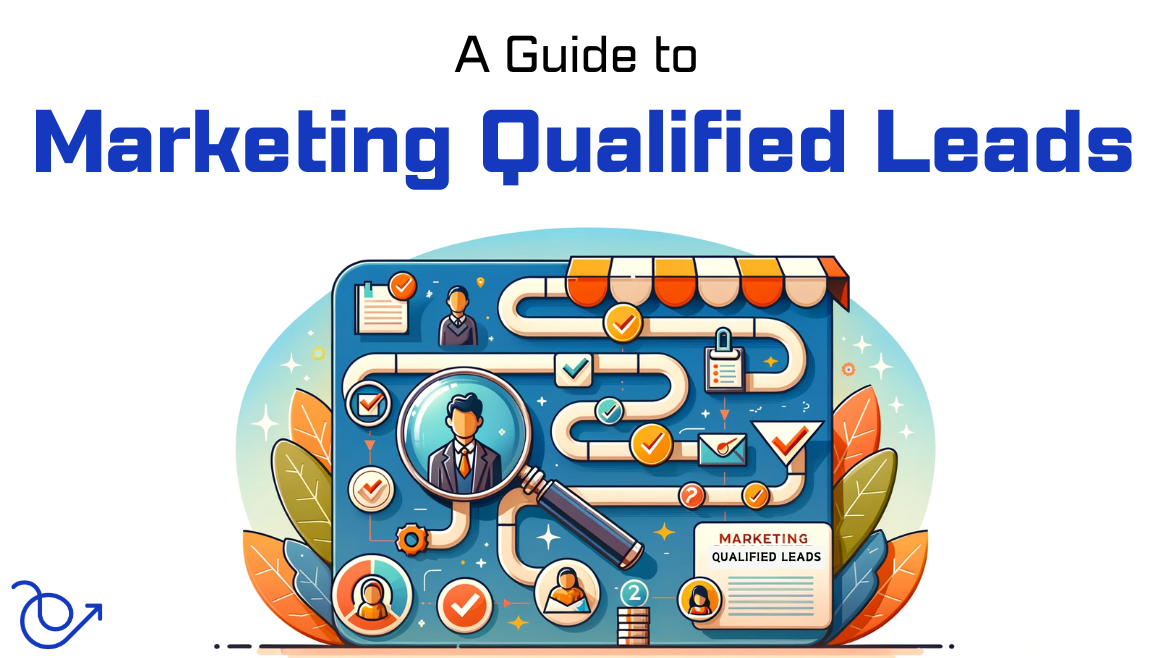
(Suggested image: A checklist showing the qualifying criteria for MQL)
Different types of MQL
You’ll be surprised to know that there are types in MQL too (I know, I was).
- Marketing Qualified Leads (MQL)
MQLs are leads that have shown interest in a company’s product or service and are more likely to become a customer.
They are typically identified based on their behavior and engagement with the company’s content.
- Sales Qualified Leads (SQL)
SQLs are leads that the sales team has accepted as worthy of a direct sales follow-up.
They are typically identified based on a combination of the lead’s behavior, engagement with the company’s content, and fit with the target market.
- Product Qualified Leads (PQL)
PQLs are leads that have used a product and reached certain usage milestones that indicate a high likelihood to convert to a paying customer.
They are typically identified based on their usage of the product.
How to Identify Marketing Qualified Leads?
Follow these steps and signs to identify marketing qualified leads for your business.
Tracking lead behavior
One of the key ways to identify MQLs is by tracking lead behavior. This can include actions such as visiting certain web pages, downloading content, attending webinars, etc.
If they fall under any of the criteria you have listed for MQLs, you have hit the bull’s eye.
Analyzing lead engagement
Another way to identify MQLs is by analyzing lead engagement. This can include factors such as the frequency of visits to the website, the number of pages viewed, the time spent on the website, etc.
Utilizing lead scoring techniques
Lead scoring techniques can also be used to identify MQLs. These techniques assign a numerical value to each lead based on various factors such as their demographic information, behavioral information, and engagement with the company’s content.
The higher the lead score, the more likely the lead is to convert into a customer.
How to Create MQL criteria?
Follow these steps to create criteria for marketing qualified leads.
Step 1: Defining ideal customer profiles
The first step in creating MQL criteria is to define your ideal customer profiles. This includes information such as the industry, company size, job role, etc. of your ideal customers.
#TCCRecommends: If defining your ideal customer profile leaves you clueless, we have a complete guide on it.
Step 2: Establishing demographic and firmographic criteria
The next step is to establish demographic and firmographic criteria. This includes factors such as the lead’s industry, company size, job role, etc.
Step 3: Identifying behavioral indicators
The final step is to identify behavioral indicators. This includes actions such as visiting certain web pages, downloading content, attending webinars, etc.
Setting up tracking of marketing qualified leads
Now that we have understood what MQL is, how to identify them, you’ll also have to be able to track them. Here goes.
- Implementing marketing automation tools
Marketing automation tools can be used to track MQLs. These tools can track lead behavior, engagement, and other factors to help you identify MQLs.
#TCCRecommends: Here’s a comprehensive guide on marketing automation.
- Utilizing CRM systems for MQL tracking
CRM systems can also be used for MQL tracking. These systems can store detailed information about each lead, including their demographic information, behavioral information, lead score, etc.
Systems like HubSpot, Zoho, Pipedrive can help you with such tasks.
- Leveraging analytics platforms for MQL insights
Analytics platforms can provide valuable insights into MQLs. They can show you which leads are most likely to convert, which marketing campaigns are most effective, etc.
What are the Effective MQL Strategies?
An MQL is more than just a lead. It’s someone who has engaged with your marketing efforts and is likely to become a customer. They might have filled out a contact form, downloaded an eBook, or signed up for a webinar.
The key to MQL strategies is to recognize these actions and effectively segment these leads from the general pool.
1. Lead Scoring
Implement a lead scoring system that assigns value to each interaction or engagement a potential customer has with your brand.
This system helps in distinguishing marketing qualified leads from other leads based on their score.
2. Targeted Content Marketing
Develop content that addresses the specific needs and interests of your MQLs.
Tailored content, whether blogs, whitepapers, or case studies, can nurture these leads further down the sales funnel.
#TCCRecommends: If you are unaware, this is how content marketing works.
3. Personalized Email Campaigns
Use the data you have on your MQLs to send personalized email campaigns.
These emails should be relevant to their interests or past interactions with your brand, creating a more personalized touchpoint.
4. Regular Engagement
Keep MQLs engaged through regular updates, newsletters, or social media interactions.
Consistent engagement keeps your brand at the forefront of their minds, increasing the likelihood of conversion.
5. Feedback and Surveys
Utilize feedback tools and surveys to understand the preferences and pain points of your MQLs. This feedback can guide your marketing and product development strategies.
6. Sales and Marketing Alignment
Ensure that your marketing and sales teams are aligned. When a lead is qualified as an MQL, the sales team should have immediate access to all relevant information to effectively close the sale.
#TCCRecommends: Take help of RevOps consultants or experts alike to bring this alignment into fruition.
How to Optimize Performance of Marketing Qualified Leads?
Say, you are receiving good marketing qualified leads from time to time. But would you be satisfied with that?
If you are, what kind of an entrepreneur or marketer are you? 😀
You got to work on optimizing and improving that number. This is how to do it.
Continuous refinement of MQL criteria
One way to optimize MQL performance is to continuously refine your MQL criteria. This can help you identify the most promising leads and focus your efforts on them.
Iterative improvement of lead scoring models
Another way to optimize MQL performance is to iteratively improve your lead scoring models. This can help you more accurately predict which leads are most likely to convert.
Optimizing MQL-to-SQL conversion rates
Finally, optimizing your MQL-to-SQL conversion rates can help you move leads more quickly through the sales funnel and increase your sales.
Conclusion
In conclusion, MQL is a critical concept in the field of marketing. It can help businesses focus their efforts on the most promising leads, thereby improving their conversion rates and increasing their sales.
Working with MQL requires a clear understanding of what constitutes an MQL, a robust process for identifying and tracking MQLs, and effective strategies for converting MQLs into customers.
As marketing technology continues to evolve, we can expect to see new trends in MQL. This could include more sophisticated lead scoring models, more advanced marketing automation tools, and more effective lead nurturing techniques.
- My pipeline is dry
- 11/08/2026
Lead count is a comfort metric. Why full pipelines produce flat revenue, and what to measure instead.
- 6 minutes reAD
- My pipeline is dry
- 04/12/2025
From awareness to decision-making, this article explains how content length influences trust, education, and buying confidence.
- 7 minutes reAD

- My pipeline is dry
- 05/11/2025
SaaS events aren’t one-size-fits-all. Discover how founders and CMOs are using trade shows and self‑hosted formats to fuel brand and pipeline growth.
- 11 minutes reAD
Read it before your competitors do.
Reading is one thing. Fixing is another.
If something you read here sounds like your business, get on a call. We will show you exactly what to do about it.
3 new clients a quarter. That is all we take.
3 in 4
Clients come back for more
11 weeks
From stuck to a working revenue system