Table of Contents
In Short
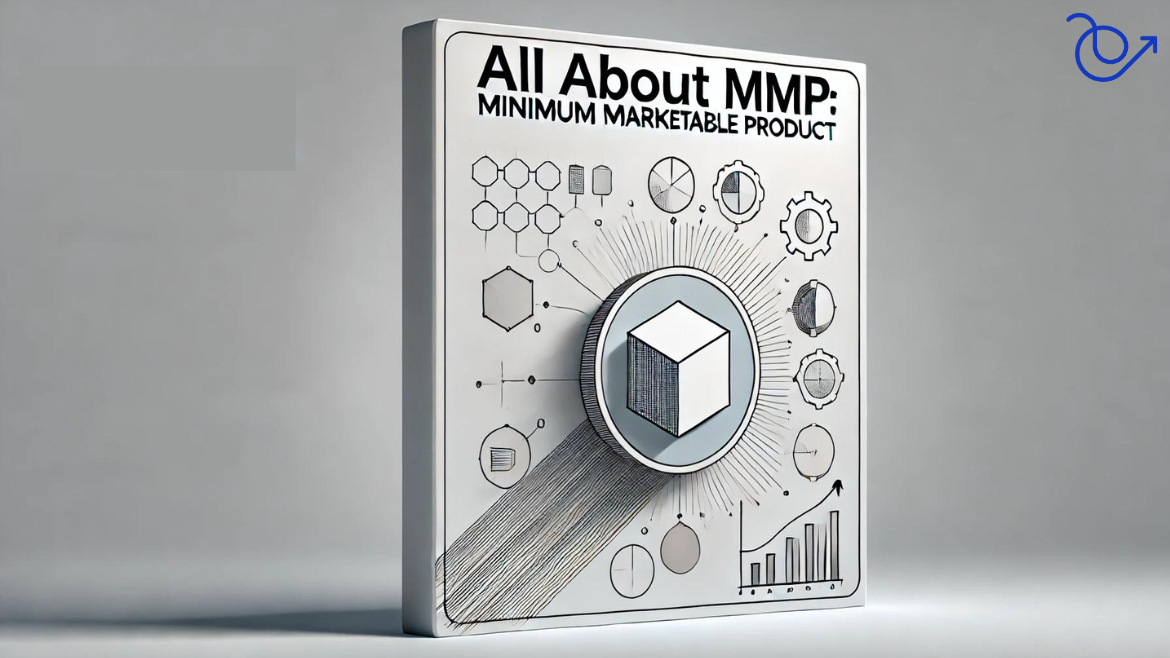
When it comes to building a SaaS, the concepts of Minimum Viable Product (MVP) and Minimum Marketable Product (MMP) are pivotal. These methodologies help startups and established companies alike in efficiently bringing products to market.
While the MVP is well-known, the MMP is a concept that deserves more attention.
This blog will explore what an MMP is, its history, how it differs from an MVP, and why it might be the right approach for your brand.
What is Minimum Marketable Product (MMP)?
A Minimum Marketable Product is a product with the smallest set of features that addresses the needs of a specific market segment and is ready to be marketed and sold.
Unlike the MVP, which focuses on learning and validation, the MMP focuses on delivering immediate value to users and generating revenue.
The History of MMP
The concept of MMP or minimum marketable product emerged as a response to the limitations of the MVP approach. Now, while the MVP aims to test and learn with minimal investment, it often lacks the polish and completeness required to attract and retain paying customers.
So, as startups began to recognize the need for a product that could both validate a market and generate revenue, the idea of the MMP was born.
This approach balances the lean principles of MVP with the market readiness necessary for successful and effective product launches.
Difference Between MMP and MVP
Of course, let’s understand the exact difference between MMP and MVP.
Purpose:
- MVP: Focuses on validating hypotheses, learning from users, and iterating based on feedback.
- MMP: Focuses on delivering a complete, marketable product that can generate revenue and satisfy early adopters.
Feature Set:
- MVP: Contains the minimal features needed to test a concept or market hypothesis.
- MMP: Contains a complete feature set that addresses core user needs and provides a satisfactory user experience.
Audience:
- MVP: Early adopters and testers who provide feedback.
- MMP: Paying customers who expect a polished, reliable product.
Examples:
- Example of MVP: Dropbox’s MVP was a simple video demonstrating the basic concept of file synchronization. It helped validate the idea and gather initial user interest.
- Example of MMP: Slack’s minimum marketable product included essential features like team messaging, file sharing, and integrations, making it marketable and valuable to its target users.
Should Brands Go for MMP or MVP?
It goes without saying, that the decision to pursue an MMP or MVP depends on the stage of your SaaS product development and your business goals:
Go for an MVP if:
- You need to validate a new idea or hypothesis.
- You want to minimize initial investment and risk.
- You are in the early stages of understanding your market.
Go for an MMP if:
- You have validated your idea and are ready to generate revenue.
- You need to build credibility and attract paying customers.
- You want to deliver a polished product that provides immediate value.
According to a study by CB Insights, 42% of startups fail because they don’t meet a market need.
Building an MMP can help mitigate this risk by ensuring that the product is marketable and valuable from the start.
An Efficient Approach to Building an MMP
For those entrepreneurs who choose to build a minimum marketable product, here’s how to go about it.
1. Market Research
Understanding your target market is the foundation of building an MMP. Conduct thorough research to identify your customers’ needs, preferences, and pain points.
Use surveys, interviews, focus groups, and competitive analysis.
This is done to gather insights to inform your product’s core features and ensure there is a demand.
2. Define Core Features
Identify the essential features that will address the primary needs of your target market. These features should provide immediate value and solve the core problems your customers face.
Use the MoSCoW method (Must have, Should have, Could have, Won’t have) to prioritize features.
This way, you will ensure that the product is functional and meets the market’s critical requirements.
3. Create a Product Roadmap
Develop a clear roadmap that outlines the development timeline, key milestones, and feature release plans.
This roadmap should balance delivering a complete product quickly and maintaining high quality.
Use project management tools like Trello, Asana, or JIRA, in order to provide a structured plan to guide the development process and ensure timely delivery.
#TCCRecommends: As we are building our own product, postgen - the AI LinkedIn post generator, we are building and following a product roadmap sincerely and I can totally vouch for this step.
4. Build and Test Iteratively
Develop the core features of your product, focusing on functionality and user experience. Conduct iterative testing to gather feedback and make necessary adjustments.
Use Agile development methodologies to build and test in sprints.
This is to ensure that each feature works as intended and provides value to users.
5. Ensure Quality and Reliability
Before launching your MMP, thoroughly test it to ensure it is reliable and free of major bugs.
Quality assurance is crucial to making a good first impression on your customers. Do not neglect performing extensive user testing, beta testing, and automated testing to deliver a polished and dependable product to the market.
6. Develop a Marketing Strategy
Create a marketing plan to promote your MMP to your target audience. This should include tactics for generating awareness, driving conversions, and retaining customers.
Utilize content marketing, social media, email marketing, and paid advertising to attract and convert potential customers.
#TCCRecommends: You can implement a combination of strategies from 30+ types of marketing for your product.
7. Launch and Gather Feedback
Launch your MMP and actively gather feedback from your initial users. Use this feedback to identify areas for improvement and plan future updates.
Use surveys, take user interviews, and go through analytics tools to continuously improve the product based on user feedback.
For Example:
Spotify initially launched as an MMP with basic music streaming capabilities, a user-friendly interface, and essential features like playlists and search functionality.
Over time, they added more advanced features based on user feedback and market demand, solidifying their position in the market.
What are the Challenges to Building an MMP?
While it may seem simple to build and launch the MMP, it comes with its own set of challenges and hassles to overcome.
1. Identifying Core Features
Determining the essential features for an MMP can be challenging. Overloading the product with too many features can lead to delays, while under-delivering can result in poor user satisfaction.
2. Balancing Speed and Quality
Building a market-ready product quickly without compromising on quality requires careful planning and execution.
3. Resource Constraints
Startups often face limited resources, making it difficult to invest in both product development and marketing simultaneously.
4. User Expectations
Paying customers have higher expectations than testers. Meeting these expectations while keeping the product lean is a significant challenge.
Across all respondents of a survey conducted by Mind the Product, 49% product managers said that their foremost challenge is being able to conduct proper market research to validate whether the market truly needs what they’re building. When we look at only the responses from enterprise software PMs, this figure jumps up to 62%.
How Does MMP Contribute to a Startup’s Success?
Of course, building an MMP comes with some sureshot benefits to a startup’s success journey. These include:
1. Faster Time to Market
An MMP allows startups to quickly introduce a viable product to the market, enabling faster revenue generation and user feedback.
2. Reduced Risk
By focusing on core features, startups can reduce the risk of over-investing in unnecessary features that may not add value.
3. Customer Validation
The minimum marketable product provides an opportunity to validate the market demand with a complete product, increasing the likelihood of customer retention and loyalty.
4. Revenue Generation
Unlike an MVP, an MMP is designed to be sold and generate revenue, providing essential funds for further development and growth.
For Example:
Dropbox started with a simple file-sharing MVP to validate the concept. After receiving positive feedback, they developed an MMP with additional features like file synchronization and sharing, leading to rapid user growth and revenue generation.
According to a report by Forrester, a well-designed customer success program can yield a 91% ROI over a three-year period.
Conclusion
The concept of Minimum Marketable Product (MMP) bridges the gap between validating a product idea and delivering a complete, market-ready product.
While the MVP focuses on learning and iteration, the MMP ensures that the product is ready to generate revenue and satisfy early adopters. Once you understand the differences between MMP and MVP, efficiently building an MMP, and overcoming the associated challenges, you can enhance your chances of success.
Of course, as the market evolves, the ability to deliver a product that meets user needs and drives revenue becomes increasingly crucial.
- I need a GTM strategy
- 07/09/2026
A profitable SaaS company is raising ₹375 crore, and a quarter of it goes to sales, marketing and customer success as a single ask. That structure is the lesson.
- 6 minutes reAD

- I need a GTM strategy
- 02/09/2026
ERP had the highest switching costs in software. An AI-native challenger is going after it anyway. What that means for whatever moat you think you have.
- 6 minutes reAD
- I need a GTM strategy
- 19/11/2025
Most B2B SaaS startups ignore these RevOps red flags until it’s too late. Learn how a consultant can clean up revenue chaos and boost scale.
- 8 minutes reAD
Read it before your competitors do.
Reading is one thing. Fixing is another.
If something you read here sounds like your business, get on a call. We will show you exactly what to do about it.
3 new clients a quarter. That is all we take.
3 in 4
Clients come back for more
11 weeks
From stuck to a working revenue system