Table of Contents
In Short
Over the 2 years that The Clueless Company started, we have had a chance to work with a lot of SaaS startups. Some in their early stage, some matured, some just building on their idea, whereas some well on their 1-10 journey.
All of them had one thing in common. The approach they wanted to take for their journey, that is, product-led growth.
Come to think of it, it’s not that product-led growth is a new approach. It’s been around ever since products, SaaS or otherwise have been introduced. It’s only now that it has been conceptualized and articulated for better understanding and implementation of the visionaries in the startup ecosystem.
This blog is going to be all about product-led growth, and what goes into succeeding with that approach for a startup in this day and age.
What is Product-led Growth?
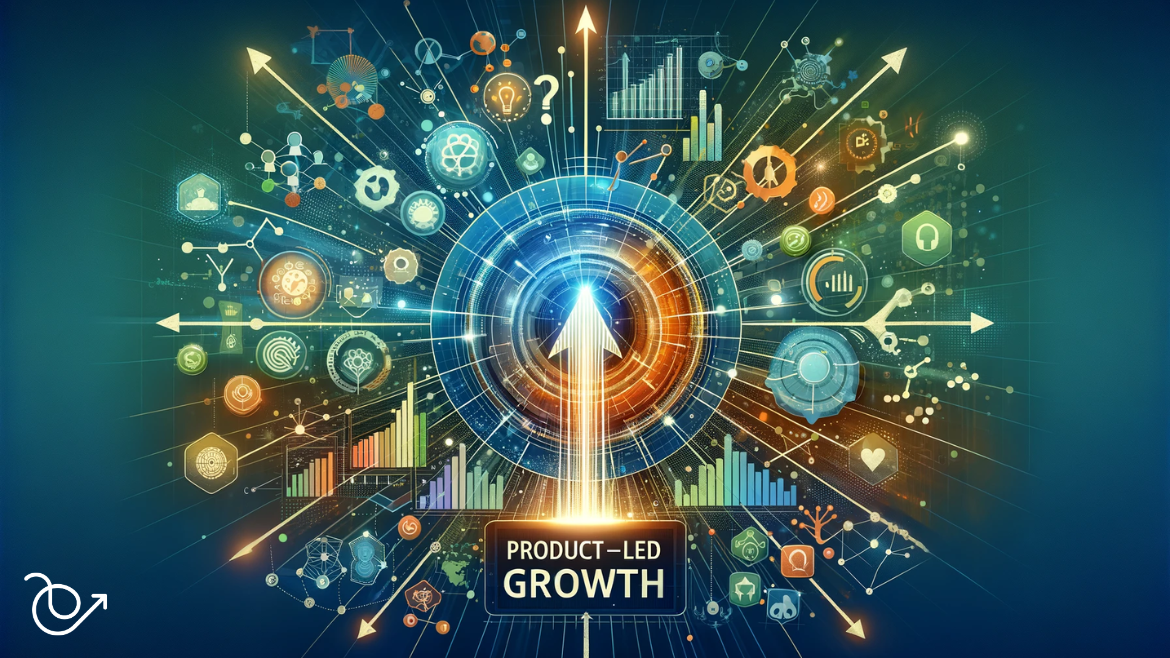
Product-led growth (PLG) is a business methodology where the product itself serves as the primary driver of customer acquisition, conversion, and expansion.
It is essentially a go-to-market strategy that relies on the product usage at different stages of the customer journey. It places the product at the center of the organization and its strategies.
In other words, the product leads the growth of the company, rather than traditional sales or marketing efforts.
PLG companies like Slack, Zoom, and HubSpot have successfully leveraged their products to fuel their growth.
Why Product-led Growth Matters?
In today’s digital age, customers have more choices than ever before. They prefer to try products before making a purchase decision. This shift in consumer behavior has led to the rise of the product led growth strategy.
According to a study by OpenView, PLG companies grow 30% faster than their counterparts and are more capital efficient.
#TCCRecommends: If you are confused between a free trial and demo for your SaaS, this can help you.
Benefits of Product-led Growth
This approach has gained significant traction among SaaS (Software as a Service) companies and digital businesses, offering a scalable and efficient pathway to growth.
Here are some of the key benefits of adopting a product-led growth strategy:
- Improved User Experience and Adoption: Since the product is at the forefront, companies are compelled to create intuitive and user-friendly products.
- Higher Conversion Rates: A free trial or freemium model allows potential customers to experience the product’s value firsthand, leading to higher conversion rates.
- Faster Time-to-Value: PLG products are designed to deliver immediate value to the user, leading to quicker user adoption and customer satisfaction.
- Reduced Customer Acquisition Costs: PLG minimizes the reliance on expensive sales and marketing efforts. With the right strategies, you can significantly lower customer acquisition costs while increasing the pool of potential customers.
- Faster Sales Cycles: Potential customers get to experience the product directly, which expedites their decision-making processes and reduces the length of the sales cycle.
- Organic Growth and Virality: Products designed with a PLG approach often include features that naturally encourage sharing and collaboration, such as user invites or content sharing. This leads to word-of-mouth marketing over paid marketing efforts.
- Scalability: With the PLS approach, as the product improves and becomes more valuable to its users, it naturally attracts more users through word-of-mouth and user referrals, leading to a sustainably scalable model.
- Improved Product Market Fit: The emphasis on the product in driving growth encourages continuous iteration and improvement based on user feedback. As a result, SaaS brands with a PLG approach quickly achieve and maintain a strong product-market fit.
- Customer Empowerment: PLG empowers customers to have a self-paced approach to explore and adopt the product as per their requirements and satisfaction. This improves their relationship with the brand, leading to a long-term engagement and advocacy.
- Increasing Customer Lifetime Value: PLG brands are continuously delivering value to their customers through their product. This increases customer satisfaction, and CLTV while they might even upgrade to premium features.
The approach of product-led growth offers a compelling pathway for SaaS companies to scale efficiently, improve their products continuously, and deepen customer relationships.
Product-led Growth vs Traditional Sales Approach
Now, the traditional sales approach relies heavily on sales teams to drive customer acquisition and expansion.
On the other hand, a product led growth model leverages the product to drive growth. This approach allows for scalability as the product can be accessed and trialed by a large number of potential customers at once.
Understanding the nuances, strengths, and limitations of each of these approaches will help you choose the strategy that aligns best with your goals, market demands, and product type.
Here’s a quick comparative look at PLG versus traditional sales approaches:
- Growth Velocity: PLG can lead to faster growth within markets where the product can sell itself through its use. Traditional sales approaches may see slower growth but can be effective in markets where building relationships and customizations are crucial.
- Market Penetration: PLG strategies excel in quickly capturing wide segments of the market, especially with lower-priced or freemium products. Traditional sales are effective in deeply penetrating niche markets or industries with high-value, complex and enterprise sales.
- Customer Acquisition Costs: PLG often boasts lower CAC due to its reliance on the product to drive sales. In contrast, traditional approaches may incur higher costs due to personnel and customized marketing strategies.
- Scalability: While both strategies can scale, PLG does so by leveraging the product’s viral potential and network effects, potentially reaching a broader audience more quickly. Traditional sales scale through increasing the sales force and enhancing sales tactics and relationships.
Choosing between PLG and a traditional sales approach depends on multiple factors, including the nature of the product, the target market, and the buying behavior of the intended customers.
While PLG offers a scalable, cost-effective path for SaaS and digital products, traditional sales approaches remain invaluable for complex, high-value solutions requiring customization and a consultative sales process.
Often, the most successful companies find a balance, integrating elements of both strategies to maximize their growth potential.
Key Elements of Product-led Growth
There are three key elements of product-led growth which you need to consider.
1. Product-Led Onboarding
Product-led onboarding is crucial for a successful product led growth strategy.
It involves guiding users through the product in a way that allows them to experience the product’s value firsthand.
#TCCRecommends: If you haven’t had an onboarding process in place yet, give this a read.
2. In-App Engagement
In-app engagement involves interacting with users within the product.
This can be done through in-app messages, prompts, and other engagement strategies, so as to keep them involved beyond regular interactions.
3. Data-Driven Iteration
Data-driven iteration involves using user behavior data and patterns to continuously improve the product.
This is crucial for ensuring the product remains relevant and continues to deliver value to users.
How to Implement Product-led Growth at Your SaaS Startup?
Needless to say, the approach to PLG is not something that happens overnight at a startup. It is a well-thought and planned out strategy that is executed with a team in place.
Here’s how to take a step-wise approach for it.
1. Setting Clear Goals
The first step in implementing a product led growth strategy, or rather any strategy is to set clear goals. These goals should be aligned with the company’s overall business objectives.
You won’t believe how often we find departmental goals and objectives misaligned from the overall business goals, which is where a RevOps consultant like TCC is brought in.
2. Identifying the Right Product-led Growth Strategy
Now, this has to be divided into proper sub-steps too.
1) Segmentation and Targeting
Segmentation and targeting involve identifying and targeting specific user segments that are most likely to find value in the product.
2) Pricing and Packaging
Pricing and packaging involve determining how to price and package the product in a way that maximizes value for both the user and the company.
3) Expanding Market Reach
Expanding market reach involves identifying and entering new markets where the product can deliver value.
3. Building a Product-led Growth Team and Culture
A product-led team is cross-functional and includes members from product, sales, marketing, and customer success. This team is responsible for driving the product led growth strategy.
1) Creating a Customer-Centric Organization
A customer-centric organization is one that places the customer at the center of all decisions and actions. This is crucial for a successful product led growth strategy.
2) Empowering Cross-Functional Collaboration
Cross-functional collaboration involves different teams working together towards a common goal. In the case of product led growth, this goal is to drive growth through the product.
3) Promoting a Culture of Experimentation
A culture of experimentation involves encouraging employees to test and learn from new ideas. This is crucial for continuous improvement and innovation in a product led growth model.
4. Prioritize the User Experience
Ensure your product is intuitive and easy to navigate for first-time users. An outstanding user experience (UX) is the cornerstone of PLG, as it directly influences adoption and retention rates.
For that reason, you should strive to create an onboarding experience that allows users to experience your product’s value as quickly as possible.
Utilize tutorials, tooltips, and interactive walkthroughs to enhance user understanding.
5. Adopt a Freemium or Free Trial Model
If it fits your budget, consider offering a freemium version or a free trial period to lower the barrier to entry, allowing users to experience the value of your product without upfront commitment.
With that, ensure there is a clear path for users to upgrade from the free version to premium plans by highlighting the additional benefits and features of paid tiers.
Keep in touch with your users during the trial phase using in-app messages or email campaigns, so as to answer any queries arising in their mind and make their experience with your brand smoother.
6. Leverage Product Analytics
Implement tools like Amplitude, Pendo or Heap to track how users interact with your product, identifying popular features, and potential friction points.
Use insights gathered from product analytics to continuously refine and improve your product.
Prioritize features and enhancements that drive user engagement and conversion.
7. Enable Recommendation Effects
Incorporate features that encourage users to invite others or share content created within your product, leveraging word-of-mouth or referrals to drive organic growth.
Encourage satisfied users to leave reviews or testimonials, which can serve as powerful social proof to prospective customers.
With time, you can use that user-generated content for your marketing campaigns.
8. Invest in Customer Success
Offer proactive customer support to help users maximize the value they derive from your product. Utilize live chat, knowledge bases, and community forums to address user needs.
Establish channels for gathering and acting on customer feedback, demonstrating that user input directly influences product development.
#TCCRecommends: If you are unsure where customer success falls in your SaaS journey, give this a read.
9. Align Teams Around PLG
Ensure that product, marketing, sales, and customer success teams are aligned in the PLG strategy, with shared goals and KPIs.
Hire a revops consultant to get this alignment in place.
They will help you foster a company culture that prioritizes product excellence and customer satisfaction as drivers of growth.
10. Measure and Iterate
Most importantly, measure and regularly review key metrics such as daily active users (DAU), monthly active users (MAU), conversion rates, churn rate, and customer lifetime value (CLTV).
Treat the PLG strategy as an iterative process, constantly seeking ways to refine and improve based on performance data and user feedback.
How to Measure Success in Product-led Growth?
Now that you know how to take a step towards product-led growth for your startup, think about how you will measure its effectiveness.
The key metrics for product led growth include:
- user activation rate,
- daily active users,
- churn rate, and
- customer lifetime value.
While tracking user engagement involves monitoring how users interact with the product. This can provide valuable insights into how the product is delivering value to users.
Moreover, do not forget to analyse the conversion funnel, which involves tracking how users move through the conversion process. This can provide insights into where users are dropping off and where there are opportunities for improvement.
Case Studies of Successful Product-led Growth
Slack: From Freemium to Enterprise
Slack is a prime example of a successful product led growth company.
They started with a freemium model and gradually expanded to enterprise customers by continuously delivering value through their product.
Zoom: Empowering Remote Collaboration
Zoom leveraged product led growth to become a leading platform for remote collaboration.
Their easy-to-use product and freemium model allowed them to quickly gain a large user base.
HubSpot: Inbound Marketing and CRM
HubSpot used product led growth to become a leader in inbound marketing and CRM.
Their comprehensive suite of tools and focus on delivering value to users has driven their success.
Conclusion
Embracing product led growth can lead to significant business success. By placing the product at the center of the organization, companies can deliver more value to users, leading to higher user adoption, conversion, and expansion.
The future of business growth lies in product led growth. With the rise of digital technologies and changing consumer behavior, companies that can leverage their product to drive growth will have a significant advantage.
Companies should start implementing a product led growth strategy now to stay ahead of the competition. This involves setting clear goals, building a product-led team, and continuously iterating and improving the product based on user feedback and market trends.
- I need a GTM strategy
- 07/09/2026
A profitable SaaS company is raising ₹375 crore, and a quarter of it goes to sales, marketing and customer success as a single ask. That structure is the lesson.
- 6 minutes reAD

- I need a GTM strategy
- 02/09/2026
ERP had the highest switching costs in software. An AI-native challenger is going after it anyway. What that means for whatever moat you think you have.
- 6 minutes reAD
- I need a GTM strategy
- 19/11/2025
Most B2B SaaS startups ignore these RevOps red flags until it’s too late. Learn how a consultant can clean up revenue chaos and boost scale.
- 8 minutes reAD
Read it before your competitors do.
Reading is one thing. Fixing is another.
If something you read here sounds like your business, get on a call. We will show you exactly what to do about it.
3 new clients a quarter. That is all we take.
3 in 4
Clients come back for more
11 weeks
From stuck to a working revenue system