Table of Contents
In Short
Having an effective B2B SaaS lead generation funnel is super important for your brand to turn potential leads into actual customers.
But here’s the kicker: a whopping 68% of companies admit they haven’t really checked how well their sales funnel is doing.
And get this, a whopping 79% say that those leads generated by marketing efforts never really make it to the finish line as customers.
So, what’s the deal? It means there’s a real need for some serious sales funnel fine-tuning. Companies need to take a close look at how their funnels are performing, where they’re falling short, and what they can do to make things better.
- What is a Lead Generation Funnel?
- What are the Stages in the Lead Funnel?
- Why do B2B SaaS Companies Need a Sales and Marketing Funnel?
- 5 Key Steps to Create a B2B SaaS Lead Generation Funnel
- B2B SaaS Lead Generation Funnel Best Practices
- Final Thoughts
In this piece, we’ll dive into the basics of B2B SaaS lead generation funnels and share smart ways your brand can spruce up this whole approach!
What is a Lead Generation Funnel?
A lead funnel is like the roadmap that takes someone from just hearing about your product to becoming a happy customer.
Lead generation is akin to fishing. You begin by selecting the specific fish you’re targeting and pinpointing their location. Then, it’s all about choosing the perfect bait for your hook and casting your line. But the process doesn’t conclude there; once you’ve got a fish nibbling, you can’t hastily start reeling in your line. There’s an art to hooking that fish and smoothly reeling it in without losing it in the process.
When rounding up potential customers, there are two ways to go about it – inbound and outbound lead generation.
- Inbound Lead Generation: This is like putting out the welcome mat and inviting folks in. You create interesting content that attracts people and gets them talking to your brand.
- Outbound Lead Generation: Here, you take the initiative and go to your prospects. You’re the one starting the conversation. Think of things like cold calling, sending out chilly emails, or even kicking off a chat on your website.
What are the Stages in the Lead Funnel?
Lead funnel for B2B SaaS, or for any sector is divided in the following stages.
Top of the Funnel (TOFU): This is where people first hear about your brand and what you do. Your website is like the welcome mat, the first place folks check out to get to know you better. So, make sure your site offers a personalized experience.
At this stage, you want to:
- Create cool content that shows off your product (think blog posts, reviews, social media posts).
- Build trust with your audience.
By serving timely content, you’re raising awareness about your product and establishing authority. This sets the stage for the next stop.
Middle of the Funnel (MOFU): Now, your visitors are digging into the options available to solve their problems. Your main mission here is to prove that your solution is the right fit and can actually solve their issues.
You can do this with customer reviews, email nurture series, buyers’ guides, and product comparisons.
Bottom of the Funnel: When your visitors make it here, they’re not just window-shopping anymore. They’re ready to do business with you, and these folks are now qualified leads.
Your top priority at this point is to make the sale. You can use case studies, product demos, and price comparisons to convince them that your solution is the way to go.
The trick is to make this journey smooth and hassle-free. You’ve got to deal with any concerns your visitors might have, making the whole experience enjoyable and increasing the chances of turning more visitors into happy customers.
Why do B2B SaaS Companies Need a Sales and Marketing Funnel?
Think of a lead generation funnel as a blend of marketing and sales. Marketing’s job is to attract potential customers to your company, while the sales team’s mission is to turn those interested folks into actual paying customers.
Without marketing, you’d have a tough time getting the right people to even notice your business, let alone understand how it can solve their problems. On the other hand, without the sales team, those potential customers might never make the leap to becoming paying customers.
Here’s the kicker: studies have shown that companies that take the time to nurture their leads generate 50% more sales and do it at a 33% lower cost.
That’s why a well-structured funnel is crucial. It helps you connect with your leads at every stage of their decision-making journey.
But it’s not just about making the sale; a sales funnel is like a secret weapon that tells you what’s going right and what needs tweaking. You can see where leads drop out, when they start engaging with your company, and when it’s the perfect time to follow up and convert them into customers.
Understanding your sales funnel helps you address your customers’ needs and deliver the right message at the right time. It also lets you set up a system to scale your sales process, predict your revenue, and boost your conversion rates.
Now, let’s dive into an example of what a B2B SaaS sales funnel might look like. Keep in mind that the specific terms used can vary depending on your business model and the folks you’re targeting:
- Untouched: These are the people who haven’t even heard about your offering yet. You need to grab their attention through your website and other marketing materials.
- Visitor: When someone who was previously “untouched” lands on your website, they become a visitor.
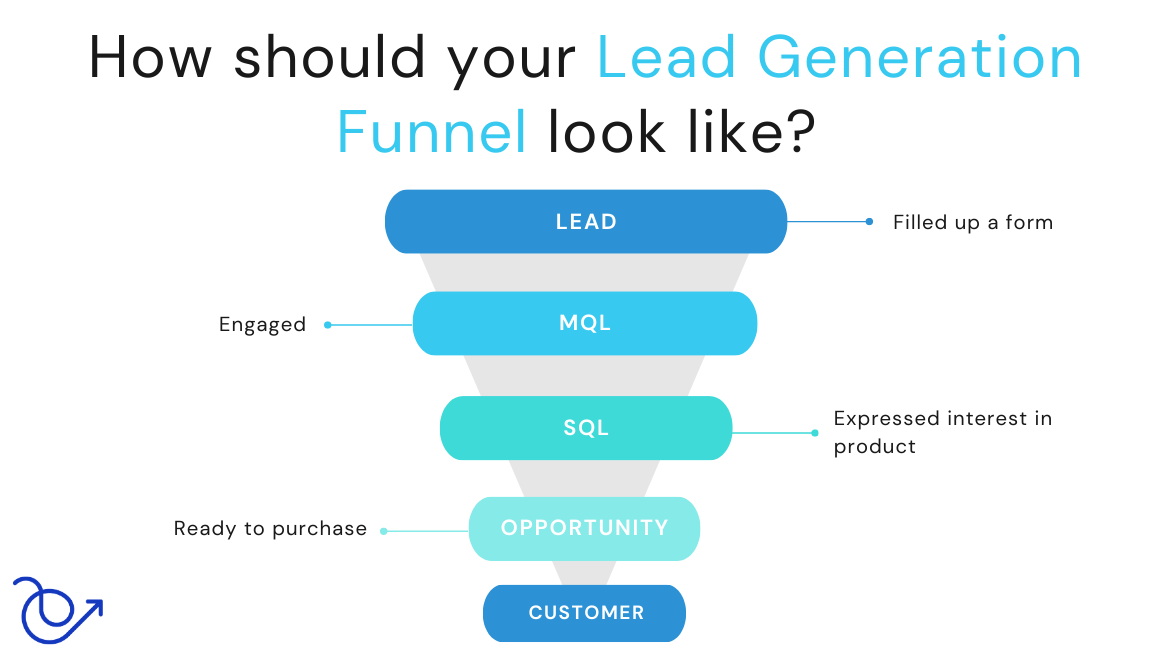
- Lead: A lead is someone who has given you their info, maybe by filling out a form on your website or another piece of content.
- Marketing Qualified Lead (MQL): These leads have shown more interest by going further down the funnel.
- Sales Qualified Lead (SQL): These are the leads that the sales team has identified as worth following up with because they’re engaged.
- Hot Buyer: These are the real opportunities, the folks who are ready to make a purchase.
- Customer: The lead becomes a customer when they make a purchase.
5 Key Steps to Create a B2B SaaS Lead Generation Funnel
Follow these steps to build a lead generation funnel for your B2B SaaS brand.
Step 1: Create Your Buyer Persona
To kickstart your lead generation funnel, begin by crafting a detailed buyer persona. Think of this as a fictional character who embodies your ideal customer. This persona helps you connect with your audience on a deeper level by understanding their needs, purchase decision process, and what drives them.
By defining your buyer persona, you can tailor your content to resonate with them, resulting in higher-quality leads.
Step 2: Plot the Customer Journey
Visualize the path your potential customers take from being mere visitors to becoming loyal customers. This roadmap, known as the customer journey map, is instrumental in nurturing leads, assessing their quality, discovering new lead sources, and resolving any roadblocks in your funnel.
Research indicates that effective customer journey management can drastically accelerate your sales cycle, sometimes up to 18 times faster.
Step 3: Raise Brand Awareness
After you’ve established your buyer persona and mapped out the customer journey, the next step is to enhance brand awareness.
To achieve this, you can employ a variety of strategies, but we’ll focus on the most effective methods.
3.1: Utilize Content Marketing to Boost Awareness
Content marketing is a potent approach for elevating brand visibility. This strategy revolves around crafting tailored content that your target audience finds valuable and relevant.
It’s the kind of content that captivates, nurtures, and eventually converts your leads. You can use various content types, including blog posts, eBooks, infographics, videos, social media posts, webinars, case studies, and more.
To make your content marketing truly effective, it’s essential not only to create top-notch content but also to devise a solid content distribution plan. This plan dictates the channels and strategies for content promotion, essentially deciding how far your message reaches.
3.2: Harness the Power of Social Media for Awareness
Social media, with nearly 4 billion monthly active users, emerges as one of the most potent channels for raising brand awareness.
A few key tips to maximize social media for this purpose:
- Select the right platforms based on your target audience’s preferences.
- Optimize your social profiles for easy brand recognition.
- Utilize trending hashtags to improve your posts’ discoverability.
- Engage actively with followers and other brands while participating in trending discussions.
- Leverage tagging, including influencers and relevant individuals, to broaden your reach.
- Make use of newsjacking by creating content around current trends.
- Host live events, as these interactive sessions tend to draw substantial attention.
With the right social media marketing strategies, automation tools, and social listening aids, you can conduct effective social media campaigns to fuel your funnel.
Step 4: Drive Traffic to Your Sales Funnel and Reach Out to Prospects
With the fundamental building blocks of your lead generation funnel in place, it’s time to channel traffic into it. This entails utilizing both inbound and outbound techniques to ensure a consistent influx of leads.
4.1 Inbound Lead Generation
Inbound lead generation is about creating digital assets that naturally draw visitors to your website. The key here is to align your content precisely with your target audience.
4.2 Leverage Organic Search for Lead Generation
Organic search (also known as SEO) refers to people discovering your product online through web searches, and it’s an invaluable source of unpaid traffic. By incorporating SEO for your startup, you can ensure that your business is easily discoverable by your target audience, helping you grow and succeed in the competitive digital landscape.
To generate organic traffic for your funnel, you must create content optimized for search engines. This involves using keywords effectively, addressing user intent, building backlinks to your blog posts, and enhancing the user experience on your website.
4.3 Utilize Paid Advertising (PPC) for Lead Generation
Paid advertising is another route for driving traffic to your sales funnel.
You can promote your content through platforms like Google Ads, Bing Ads, social media ads on Facebook or LinkedIn, and more. Paying for content promotion expands your reach and increases the flow of traffic.
4.4. Harness Social Media for Lead Generation
Social media is a versatile platform utilized by both B2B and B2C brands to generate leads. Effective social media posts can potentially go viral and create significant brand exposure.
4.5 Use Email Marketing for Lead Generation
An email marketing list is a precious asset for your business. You can send targeted emails to your subscribers, directing them toward content that guides them through your sales funnel.
Since you’ve already established initial contact, they are more likely to trust your brand and engage with your content.
4.6 Outbound Lead Generation
Another method to drive traffic into your sales funnel involves utilizing outbound lead generation tactics. This includes:
- Cold Email Outreach: Cold email outreach involves sending emails to individuals or companies with whom you have had no prior interactions. It’s vital to follow best practices for cold emailing to enhance your chances of recipients opening and responding to your emails.
- Social Media Outreach: Beyond posting content on social media, you can directly reach out to potential leads. This means sending direct messages (DMs) to your prospects on their preferred social media platforms. Effective social media outreach involves initiating public interactions with your prospects, providing value before making demands, and personalizing your messages.
Step 5: Build a Database and Convert Leads into Customers
By this stage, your lead generation funnel should be attracting a significant number of leads. Here’s a quick recap of the process:
- Create an irresistible offer or lead magnet for your target audience.
- Promote your lead magnet through both organic and paid channels.
- Your target audience signs up for your offer.
B2B SaaS Lead Generation Funnel Best Practices
Consider these best practices while building your B2B SaaS lead generation funnel.
- Qualify Your Leads: Figure out which leads are more likely to become customers and focus your efforts on them. For example, someone who starts a free trial is probably closer to making a purchase than someone who just clicks a CTA.
- Choose the Right Tools: There are tons of lead generation tools out there to help you with everything from attracting traffic to capturing leads and communicating. If you need to schedule meetings with leads, go for software that helps manage your calendar and set up video calls.
- Experiment and Learn: Don’t be afraid to try different strategies and lead funnels to see what really resonates with your audience. Test out various things like content types, advertising approaches, and different landing pages to see what works best.
- Analyze Rejected Leads: Take a closer look at leads that didn’t make the cut. Check where these leads came from, and how engaged they were, and consider asking for feedback to understand why things didn’t work out.
- Speedy Responses: Think about using lead management automation to ensure you respond quickly to leads. Quick follow-ups can make a big difference.
When you set up your lead generation funnel correctly and use automation effectively, it’s like having a dedicated salesperson who’s out there bringing in new clients while you focus on all the other important aspects of running your business.
You’ll still need to keep the content fresh and your funnel well-tuned, but an automated funnel can take care of a lot of the legwork, giving you more time to handle the things that make your business thrive.
Final Thoughts
In wrapping things up, it’s essential to remember that B2B SaaS lead generation is more like a big puzzle. You’ve got various marketing strategies and channels in play, like content marketing, paid social, SEO, and Google Ads.
But here’s the deal: don’t treat them as separate pieces; see them as essential parts of your broader business growth plan. They all need to work together harmoniously to bring your business to new heights.
- My pipeline is dry
- 11/08/2026
Lead count is a comfort metric. Why full pipelines produce flat revenue, and what to measure instead.
- 6 minutes reAD
- My pipeline is dry
- 04/12/2025
From awareness to decision-making, this article explains how content length influences trust, education, and buying confidence.
- 7 minutes reAD
- My pipeline is dry
- 05/11/2025
SaaS events aren’t one-size-fits-all. Discover how founders and CMOs are using trade shows and self‑hosted formats to fuel brand and pipeline growth.
- 11 minutes reAD
Read it before your competitors do.
Reading is one thing. Fixing is another.
If something you read here sounds like your business, get on a call. We will show you exactly what to do about it.
3 new clients a quarter. That is all we take.
3 in 4
Clients come back for more
11 weeks
From stuck to a working revenue system