In the past, marketers relied on the traditional marketing funnel, which had stages like awareness, consideration, and conversion. The goal was to grab the attention of as many potential customers as possible, even though only a fraction would end up making a purchase.
Essentially, the aim was to “widen the funnel” to boost potential sales. But, this funnel model only captures part of the customer’s journey in today’s fast-changing market. This realization led to the emergence of the flywheel marketing model.
Now, unlike the funnel, the flywheel puts customers at the heart of every process, with their experience steering all the growth.
This model, inspired by Amazon’s business approach, follows these stages:
- Attract
- Engage
- Delight
Keep reading to understand:
What is Flywheel Marketing?
Consider your most recent online product or service purchase. Chances are, you weren’t swayed by a paid advertisement. Instead, you likely conducted research about the company and product, reading multiple reviews and customer testimonials before deciding to buy.
Traditional outbound marketing methods often face skepticism from consumers. In response, inbound marketing strategies like the flywheel principle have gained popularity.
Flywheel marketing revolves around creating customer-centric marketing strategies that not only persuade customers but also empower them to play a role in driving your business forward. This approach fosters loyalty and encourages word-of-mouth recommendations.
Flywheel marketing has three main steps:
- Attract: This is where you draw in potential leads by sharing valuable content like blog posts, web articles, social media stuff, or running pay-per-click ads.
- Engage: Once you have their attention, it’s all about nurturing those leads. Build trust and turn them into actual customers. This stage involves strategies like sending them engaging emails and making sure your website converts visitors into buyers.
- Delight: After they become customers, it’s now time to kick back. Keep them happy and interested in your products. This involves things like top-notch customer service across different channels, loyalty programs, and other tricks to make sure they stick around.
The cool thing about this approach is that when you prioritize your customers’ experience in every part of this wheel, it turns into a never-ending cycle. Happy customers become your biggest fans and bring in new prospects, and the wheel keeps on spinning.
Flywheel Marketing vs Traditional Sales Funnel Approach
Both approaches aim to turn prospects into customers, but their methods are quite different.
Here’s the deal with the sales funnel: It’s all about moving people through various stages, from the initial awareness stage to piquing their interest, considering your product or service, and finally taking action.
But here’s the kicker – it’s not a straight path. People often bounce around between these stages, making it a bit messy and not so linear. Plus, the sales funnel doesn’t do a great job of accounting for loyal customers. Sure, some funnels tack on a “loyalty” stage, but it doesn’t create a clear pathway for nurturing repeat business.
Now, let’s talk about the flywheel. In this model, the customer takes center stage. It’s all about guiding prospects from being complete strangers to becoming enthusiastic promoters of your brand. It follows the journey from potential customer to actual customer but doesn’t stop there. It harnesses that momentum to generate new customers and prospects from your existing, happy customers.
Imagine it like a wheel with your customer at the heart of it. This approach is all about keeping your customers delighted and viewing them as a valuable channel for driving growth.
For example, take a look at HubSpot’s flywheel.
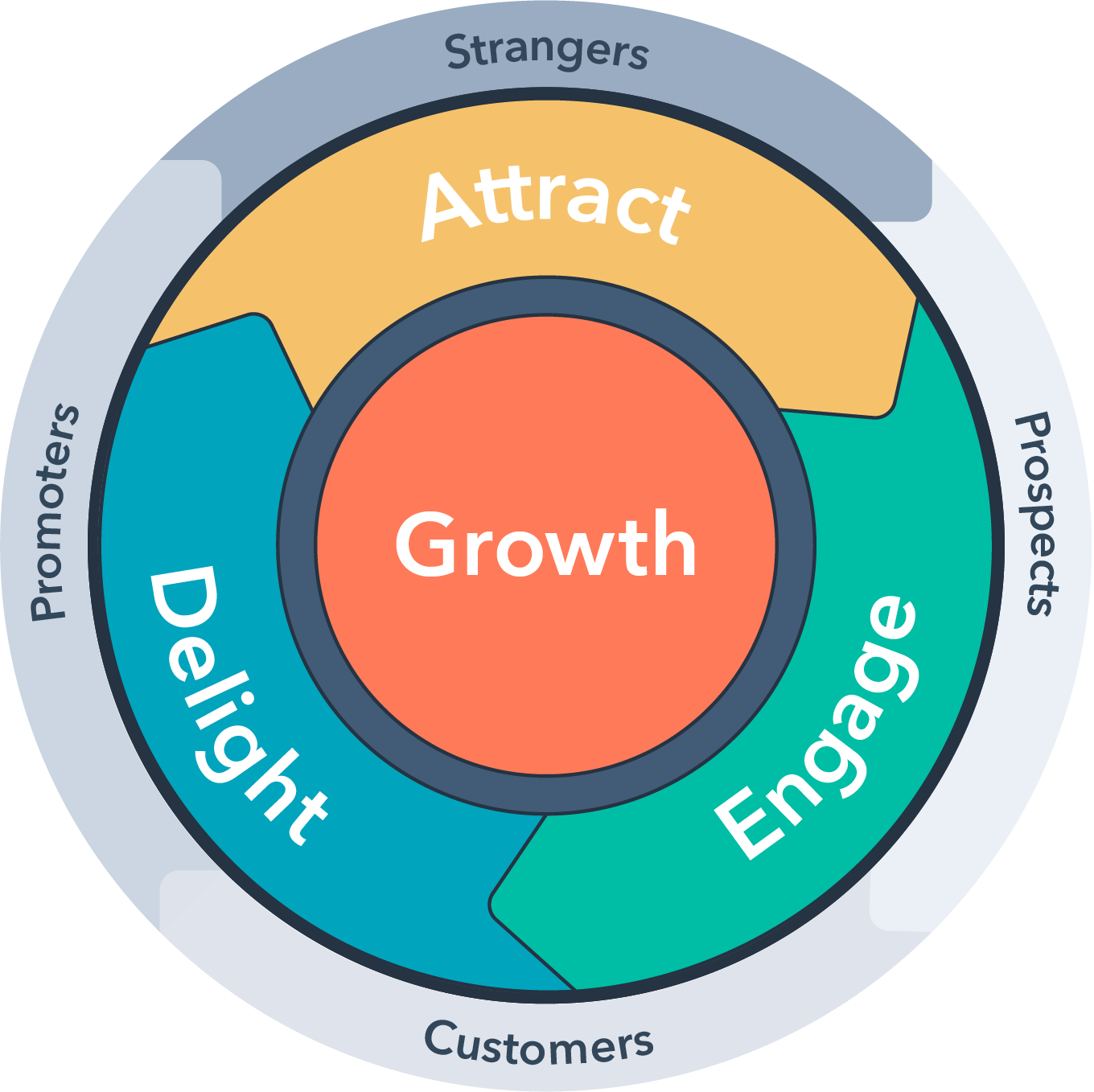
In a nutshell, the flywheel model is all about creating a continuous cycle of growth and putting loyal customers front and center.
It’s a shift from the traditional funnel, and it prioritizes customer satisfaction while driving sustainable business growth.
Why Integrating Flywheel Marketing into Your Business is Crucial?
Wondering why you should ditch the traditional sales funnel and give flywheel marketing a shot? Well, here are some compelling reasons to consider making the switch:
1. Brings In More Top-Notch Leads
With flywheel marketing, it’s all about putting your customers at the center of your universe. Everything you do in your marketing efforts is geared towards delivering the best possible experience for them.
Why does this matter? Because satisfied customers tend to spread the word to their friends and family when they’re thinking about buying something. So, by prioritizing customer satisfaction, you end up attracting more high-quality leads to your business.
2. Promotes Team Harmony
One of the downsides of the sales funnel is that customers often interact with different parts of your company at various stages. It can get a bit confusing when they’re bouncing around between customer service, sales, and marketing.
The flywheel model changes the game by having all your team members engage with prospects throughout the entire cycle. This means everyone’s on the same page, working together to provide a smoother and more cohesive experience for customers.
#TCCRecommends: On the topic of harmony, have you given RevOps a chance?
3. Maintains Happy, Loyal Customers
Remember, in the flywheel setup, keeping your customers happy and loyal is the name of the game. This is crucial because it’s cheaper to retain loyal customers than to constantly chase after new ones.
Think about it – these folks have already shown interest in your business by making a purchase. The traditional sales funnel often overlooks the importance of nurturing this loyalty, leading to more spending on acquiring new customers.
With the flywheel, you’re not just after new customers; you’re all about keeping the ones you have. And that translates to better retention rates, a higher return on your marketing investment, and a happier, more loyal customer base.
How to Implement Flywheel Marketing for Better Customer Experience?
If you’re considering making the shift to the Flywheel Model for your business, tackling the challenges associated with this change should be high on your priority list. The good news is that you probably already have the building blocks you need to construct your very own flywheel for business success.
Just take a step back, look at your existing funnel, and figure out which pieces can fit into the different stages of the flywheel.
Here’s a breakdown of essential steps to leverage the flywheel model and enhance the customer experience.
Step 1: Get Reacquainted with Flywheel Stages
First things first, you’ll need to establish the stages of your flywheel. There are a few variations out there, but let’s use a simple four-stage model: Activate, Adopt, Adore, and Advocate.
- Activate: Here, the goal is to convert those who are evaluating your product into new users. You can achieve this by showcasing your expertise through a high-converting website, offering free trials, or valuable free plans.
- Adopt: This stage is about keeping new users engaged and making your product their top choice. Focus on converting beginners into regular users who are mastering your offerings. Engage them through tutorials, highlight features, and provide added value.
- Adore: Now, you’re aiming to turn regular users into champions who love your product. It’s essential to retain current customers, and this stage emphasizes that. Share success stories, gather feedback, and encourage upgrades to premium plans.
- Advocate: In the final stage, your champions become your advocates, helping you bring in new customers. This relies on customer testimonials, reviews, and user-generated content. You can even consider incentivizing advocates through affiliate programs or reward systems.
Step 2: Set Clear Metrics
Now that you’ve defined your stages, it’s time to set specific metrics and goals for each one. Let’s use the same model as an example:
- Activate: Measure product-qualified leads and new trial sign-ups or initial sales per month.
- Adopt: Track how many customers have achieved value (versus total new customers) and the number of customers who complete onboarding.
- Adore: Monitor retention rates, average revenue per user (ARPU), and customer lifetime value (CLV).
- Advocate: Keep an eye on new leads recruited by current customers and sign-ups for an affiliate program.
Step 3: Identify and Address Friction Points
Pay close attention to potential areas of friction within your flywheel. Look for anything that might slow down the acquisition of new leads, hinder customer loyalty, or cause existing customers to leave. Here are some areas to consider:
- Activate: Optimize retargeting campaigns, enhance website security, and ensure team alignment.
- Adopt: Focus on consistent and effective copywriting, maintain up-to-date onboarding materials, and make upgrading easy.
- Adore: Improve content personalization, streamline customer support, simplify renewals and billing, and implement product enhancements based on feedback.
- Advocate: Make it easy for customers to share your product or content, consider incentivizing user-generated content and reviews, and explore affiliate programs.
Step 4: Experiment with CRO
Constantly test and experiment with conversion rate optimization (CRO) strategies. Tailor your tests to the specific goals and friction points within each stage of your flywheel.
Some examples include:
- Activate: Test different landing page copy and design to boost sign-ups.
- Adopt: Experiment with highlighting overlooked features for upselling.
- Adore: Try various approaches to collecting feedback, such as one-click surveys or detailed forms.
- Advocate: Test different reward structures for incentivized sales, like using reward tiers.
Step 5: Track and Assess Your Progress
Regularly monitor and evaluate your Flywheel Model. Keep an eye on customer satisfaction, referrals, upsells, cross-sells, and any potential pitfalls that could impact your business.
Ensure you’re hitting your targets and experiencing steady growth.
Incorporating the flywheel model into your business strategy can add momentum and drive consistent conversions.
It’s a customer-centric approach that prioritizes satisfaction and sustainable growth. So, go ahead, and give it a spin!
Partner with TCC for Sustainable Growth
Flywheel marketing is where inbound marketing is headed, and at TCC, we’re all about embracing the future. As a forward-looking RevOps consultant, we’re here to elevate your inbound marketing game.
Our expertise lies in offering complete digital marketing and revenue operation solutions, covering everything from social media marketing to content marketing and beyond. We’re here to assist you in harnessing the power of customer satisfaction to propel your business to new heights.
If you're interested in discovering not so stereotypical tips and strategies for effectively making your B2B brand shine, join our community of 20,000 savvy readers by subscribing to The Clueless Company!